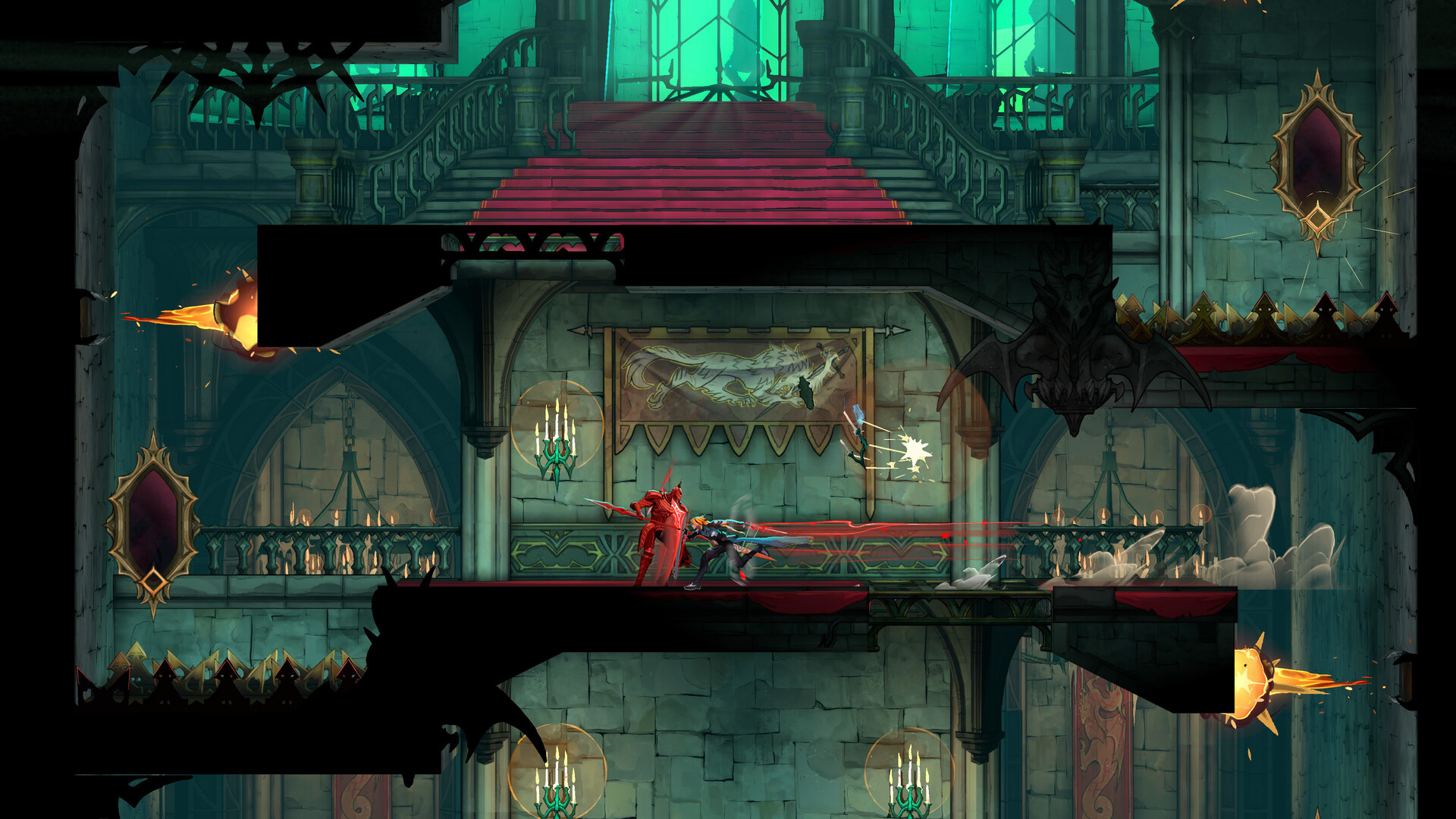
Vampire Killer is the central traversal and combat weapon for Rose Belmont. Rose starts the game with slide and wall-jump already in her base kit, and the whip serves both for offense and for moving through the environment. The signature combat mechanic is trapeze-style aerial movement: Rose swings from anchor points 'like a trapeze artist' to cross gaps, reach hidden paths, and chain aerial attacks. The Famitsu preview flagged this whip mastery as having the steepest learning curve but also the biggest mastery reward.
More context
Use the whip against bosses that punish slow defensive play, in rooms with anchor points and grapple lines, and as the i-frame roll on entry and exit; switch to Spear or Sword & Shield against close-range gaze or aura effects.
On this page
How the whip is built
- Vampire Killer is the signature holy whip that doubles as a traversal tool. Rose can already slide and wall-jump without it; the whip adds offense plus aerial mobility.
- Whip dashes and grapples produce invincibility frames (i-frames), which reward continuous aerial mobility and rush-down attacks rather than slow defensive play.
- The Arcana Whip is an upgrade ability earned after the demo's first boss (the Monster in the sewers), and it unlocks long-range whip strikes and aerial swing combat.
- No formal combo-input names have been published; reviewers describe combos by their gameplay role — 'aerial rush,' 'grapple strike,' 'swing-cancel' — rather than by chain names.
What whip combat looks like in practice
Propelling toward enemies and landing a powerful aerial strike
Often described as 'pounce on your prey like a wolf.' This is the highest-payoff expression of the kit.
Done when: Aerial rush strike lands from the trapeze arc.
Trapeze swings across gaps and into hidden paths
The same aerial mechanic that handles exploration also handles offense, which is why whip mastery is the steepest but most rewarding skill curve in the game.
Done when: Hidden paths unlock via trapeze swings.
Aerial rush chains
Repeated grapples and dashes that keep i-frames rolling while stacking damage. This is the answer to fights like Isaac, where his spear tracking punishes standing still.
Done when: Aerial chain holds i-frames across the fight window.
When to use the whip vs. another weapon
Use the whip
Bosses that punish slow defensive play (Isaac in the Main Hall); rooms with anchor points and grapple lines; fights where i-frames on entry and exit matter (Death in Catacombs, Death at Notre-Dame).
Best for: Mobility builds that chain aerial grapples.
Skip the whip
Bosses with gaze or aura effects at close range (Medusa's petrifying gaze); flat arenas without anchor points.
Best for: Spear or Sword & Shield builds for mid- to long-range spacing.
How to learn the whip combat curve
Sewers (The Fallen)
Learn the basic aerial swing and the trapeze movement; the Arcana Whip upgrade unlocks here.
Done when: Arcana Whip is unlocked.
Burning tower (Joan of Arc)
Apply the aerial swing to a multi-pattern boss; this is where you start chaining aerial grapples into melee combos.
Done when: Aerial grapples convert to melee combos.
Roman baths (Medusa)
Learn when not to commit to close-range aerial play; her gaze is the first major lesson in reading the situation before the aerial swing.
Done when: You swap to Spear or Sword & Shield for the gaze window.
Catacombs (Death)
Bring the aerial grapples back against Death's scythe, which is where the i-frame roll matters most.
Done when: Aerial grapples reset spacing through the scythe range.
Main Hall (Isaac)
The payoff fight for whip mastery, since his spear tracking is solved by continuous aerial repositioning.
Done when: Continuous aerial repositioning beats the spear tracking.